
Wireless vibration sensor
Three-axis vibration. No sensor cabling.
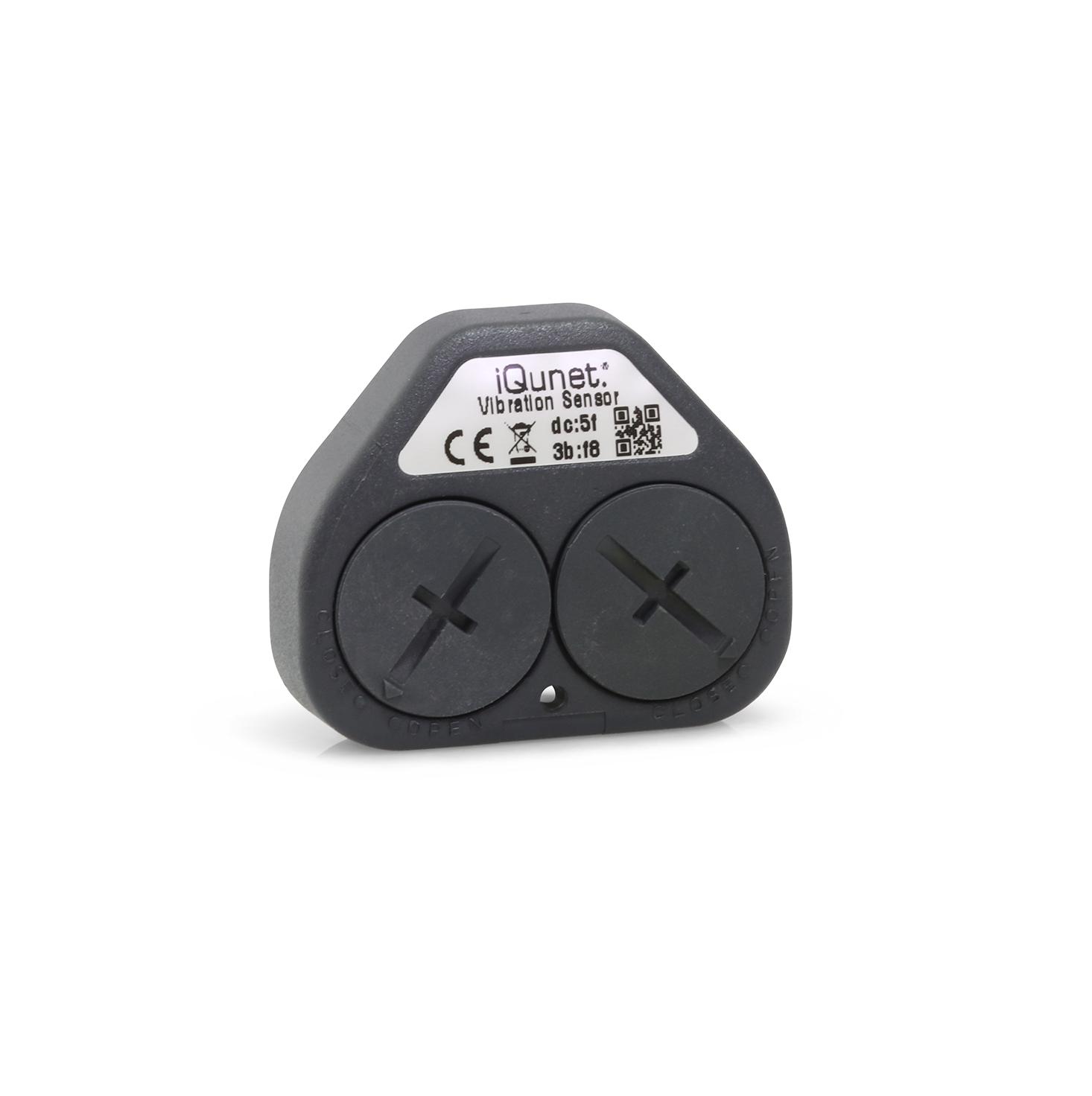
Record machine vibration where you need it
Measure vibration and temperature on motors, pumps, fans and gearboxes. Configure recordings remotely and send the waveforms wirelessly to the M4 for local storage and analysis.
- Measurement
- Three-axis vibration + temperature
- Recording
- Up to 8,192 samples per axis
- Connection
- Sub-GHz wireless · battery powered
Set the recording to suit your machine
Choose the sampling rate, recording length and measurement interval from the dashboard. Keep the time waveform for a closer look at impacts and repeating vibration.
Capture all three axes
Record X, Y and Z together to see how vibration differs with direction.
Match the vibration level
Select a measurement range of ±2, ±4, ±8 or ±16 g for the machine and operating condition.
Record on your schedule
Schedule recordings at intervals and compare the results as the machine’s condition changes.
Explore a recording
At the same sampling rate, a longer recording places the FFT bins closer together.
From a waveform to its frequency spectrum
Open a recording in Vibration Expert to inspect the time waveform and FFT spectrum. Compare recordings, follow changing frequency components in waterfall plots and export the samples for your own analysis.
Ask ChatGPT or Codex about your measurement history through the M4’s OpenAI MCP connection.
Explore AI analysis & reportingWireless measurements. Local data.
The sensor sends recordings to the M4 through a compatible iQunet radio interface. Review measurements in your browser or access them through OPC UA, MQTT and GraphQL.
Compact mounting. Replaceable batteries.
The 35 g sensor fits close to the measurement point. Choose M3 screw, magnetic or epoxy mounting for the machine surface.
With standard batteries, excluding magnet mount
- Enclosure
- IP68
- Temperature
- −20 to +70 °C
- Mounting
- M3 screw · magnetic · epoxy
Service the batteries, keep the sensor
Two replaceable CR2032 cells are included. The optional CR123A battery set extends the interval between replacements.
Up to 2 years with standard batteries, or 10 years with the extended set, at one full measurement per day using battery-friendly settings at room temperature.
Technical details
Are the vibration channels synchronised?
The current sensor records X, Y and Z together. Separate wireless sensors run on their own clocks, so recordings across devices are not phase-synchronised.
How do I choose the measurement interval?
Set the interval to capture the machine during normal operation. Frequent or longer recordings use more battery energy. For machines that run briefly or irregularly, the cable-powered sensor can listen continuously and capture activity within a measurement window.
Request a quotation
Wireless vibration sensor
Sensor with two replaceable CR2032 batteries.